There are certain faces that seem permanently connected to a particular time and place. One glimpse can bring back the glow of a jukebox, the crowded floor of a neighborhood dance club, or the sound of a favorite song drifting from an old car radio.
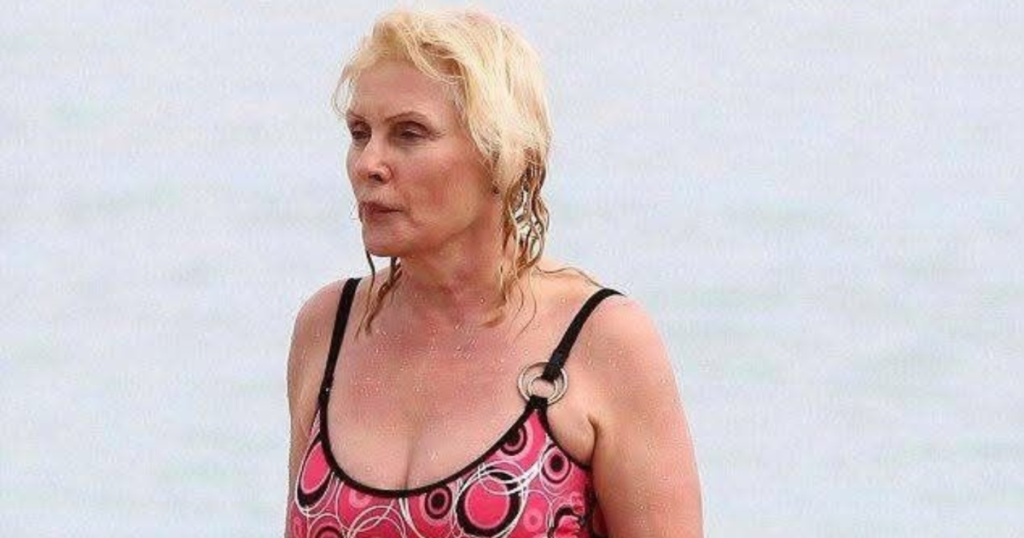
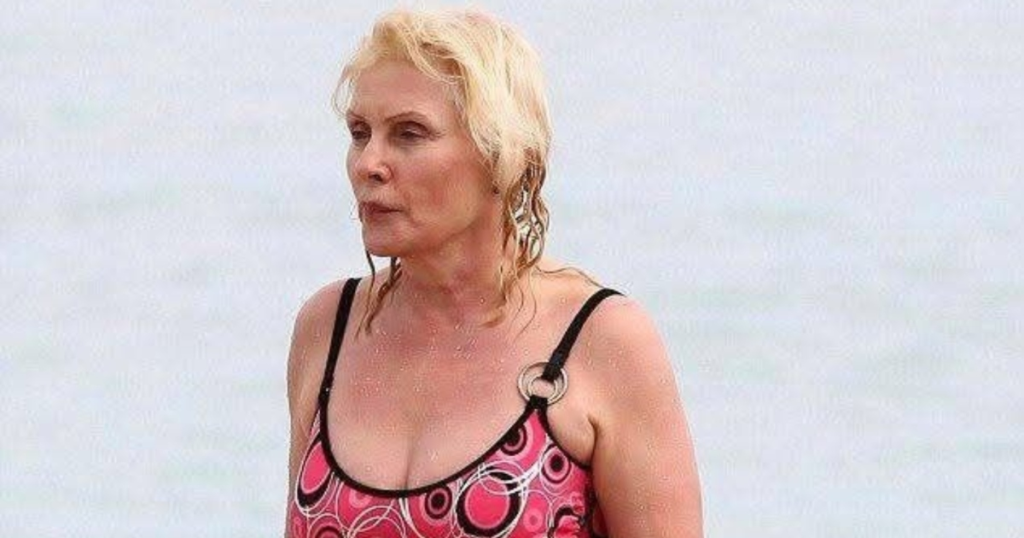
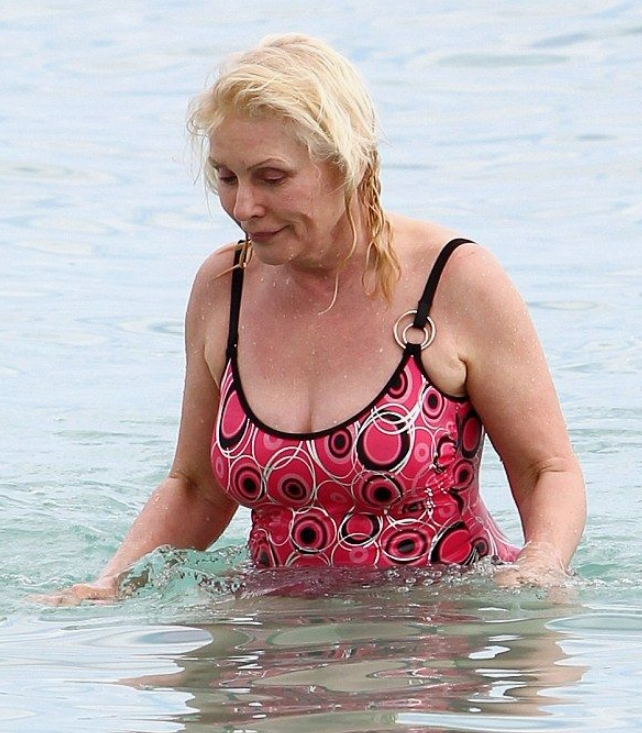
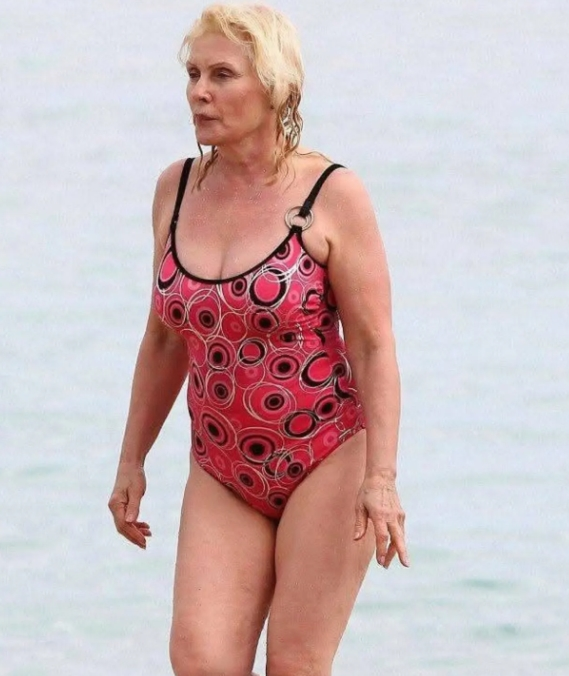
That feeling returned when a series of candid beach photographs began circulating online. The woman in the pictures appeared relaxed and comfortable as she stepped through the gentle Miami surf in a colorful geometric one-piece swimsuit.
Her short blond hair, unmistakable expression, and quietly confident presence offered a clue. This was no ordinary vacationer. She was one of the most recognizable voices and faces to emerge from New York’s late-1970s music scene.
The woman was Debbie Harry, the legendary lead singer of Blondie.
The Truth Behind the Resurfaced Beach Photographs
Although the pictures have recently attracted fresh attention, they are not from a new 2026 outing. The photographs were taken during a Miami Beach visit in February 2014, when Harry was 68.
That detail matters because old celebrity photographs are often reposted without their original dates. Presented in the proper context, these images become something more meaningful than a supposed “rare new sighting.” They offer a warm glimpse of a familiar performer enjoying an ordinary afternoon away from microphones, cameras, and concert lights.
Now 81, Harry remains a powerful reminder that a person’s identity does not disappear with age. She may have become famous for her platinum hair and cool stage persona, but her lasting appeal has always come from something deeper: independence, humor, creative courage, and an unwillingness to live according to anyone else’s expectations.
Video : Make Sure you Are Alone Before Looking At Debbie Harry’s Indecent Photos
When Blondie Changed the Sound of American Music
For listeners who came of age during the 1970s and early 1980s, Blondie’s music is woven into countless memories.
Perhaps “Heart of Glass” was playing during a first dance. Maybe “Call Me” came through the radio on a long summer drive. “The Tide Is High” might recall a kitchen radio playing while dinner was being prepared, while “One Way or Another” still carries the restless energy of a Saturday night downtown.
Blondie grew out of New York’s underground club scene, where punk, pop, art, fashion, disco, and experimentation constantly collided. Harry and guitarist Chris Stein helped form the group in 1974, creating a band that could never be placed neatly into one musical category.
Harry stood at the center of it all. Her voice could sound playful in one moment and commanding in the next. She brought old-Hollywood glamour into a gritty downtown environment, yet she never appeared manufactured. Even at the height of her fame, there was something streetwise and self-directed about her image.
That combination helped Blondie move from small New York clubs to international success. The group was inducted into the Rock & Roll Hall of Fame in 2006.
The Album That Turned an Underground Band Into Superstars
Blondie’s 1978 album Parallel Lines marked a turning point. It introduced the band to a much wider audience while preserving the adventurous spirit that had made its early work so exciting.
Songs such as “Heart of Glass,” “Hanging on the Telephone,” and “One Way or Another” sounded polished enough for mainstream radio but still carried the attitude of New York’s downtown clubs.
For many longtime fans, hearing those opening notes today is like opening a carefully stored box of photographs. The music brings back hairstyles, old friends, crowded record stores, and evenings when the future still seemed wonderfully uncertain.
The album’s cultural importance was formally recognized when Parallel Lines was added to the Library of Congress National Recording Registry in 2024. The registry preserves recordings considered culturally, historically, or aesthetically significant to American life.
Video : Debbie Harry sexy rare photos and unknown trivia facts
More Than a Famous Face
Debbie Harry’s influence was never limited to music.
Her visual style helped reshape ideas about what a female rock performer could be. She could appear glamorous without seeming delicate, fashionable without losing her edge, and playful without surrendering control of her own image.
Countless artists who followed benefited from the path she helped create. She demonstrated that a woman in popular music could be the creative center of a band, experiment across genres, embrace fashion, act in films, and remain difficult to categorize.
Harry also developed a substantial acting career, appearing in projects including Videodrome, Hairspray, and Heavy. Her screen work often reflected the same curiosity found in her music: a willingness to explore unusual characters and unexpected stories.
In 2026, it was announced that she would return to film in the independent comedy Maitreya, playing the mother of Pamela Anderson’s character. Directed by Jonathan Krisel and written by Samuel D. Hunter, the project represents another creative chapter in a career that has never followed a predictable route.
A Candid Moment That Feels Refreshingly Ordinary
Celebrity culture often depends on perfection. Magazine covers are carefully lit. Performances are rehearsed. Red-carpet appearances are planned down to the smallest detail.
These beach photographs feel different.
Harry is simply walking through the water. There is no elaborate costume, dramatic pose, or stage production. She appears to be enjoying the ocean like anyone else might.
That sense of normalcy may explain why the images continue to resonate. They allow viewers to see a famous performer as a person rather than a carefully preserved symbol from another decade.
For older readers especially, the photographs may carry an encouraging message. Aging does not require abandoning color, personality, travel, music, or pleasure. A meaningful life is not measured by how closely someone resembles an old album cover. It is measured by curiosity, connection, and the ability to remain present.
Moving Forward After the Loss of a Bandmate
Blondie’s story has included enormous success, creative reunions, personal challenges, and painful farewells.
In April 2025, the band announced the death of longtime drummer Clem Burke following a private battle with cancer. Debbie Harry, Chris Stein, and the Blondie family described Burke as the group’s heartbeat and praised the energy and commitment he brought to their music.
For anyone who has lived through several decades, that mixture of celebration and loss feels familiar. Time brings achievements, but it also brings goodbyes. What remains is the work people created together and the memories held by those who experienced it.
Every time an old Blondie record plays, Burke’s drums, Stein’s guitar, and Harry’s voice return to the room. That is one of music’s greatest gifts: it allows a moment to survive long after the calendar has moved on.
Why Debbie Harry Still Matters
Debbie Harry’s legacy cannot be reduced to blond hair, a swimsuit photograph, or even a collection of hit records.
She matters because she helped change the possibilities available to women in music. She matters because Blondie crossed boundaries between punk, pop, rock, disco, reggae, and early hip-hop influences without asking permission. She matters because her work still sounds alive rather than trapped in its original decade.
Most of all, she remains memorable because she has never seemed interested in becoming a museum piece.
The young singer who once stood beneath the lights of New York’s clubs eventually became a global star. Decades later, the woman photographed in the Miami surf still carried the same recognizable quality: a quiet refusal to be defined by convention.
A Timeless Voice and a Life Still Being Lived
For fans who remember buying Blondie records when they were new, Debbie Harry will always represent a thrilling period in American popular culture. Yet nostalgia does not have to mean living entirely in the past.
Her story connects yesterday with today. The old songs remain, the photographs continue to stir memories, and new creative projects keep appearing.
The Miami images capture only a few seconds from one afternoon in 2014. Still, they reveal something enduring. Beyond the fame and the familiar music was a woman enjoying the water, comfortable in her own company and continuing to live on her own terms.
Perhaps that is the most fitting image of Debbie Harry after all—not frozen beneath a spotlight, but moving steadily forward as the tide rolls in.