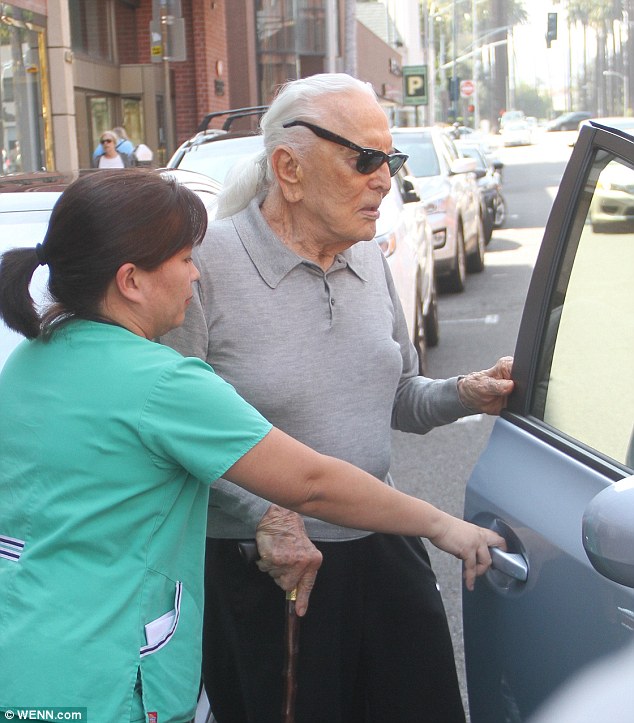
Kirk Douglas was one of the defining stars of Hollywood’s Golden Age, remembered for a screen presence that could feel forceful, intense and deeply human at the same time. Born Issur Danielovitch in Amsterdam, New York, he grew up in a modest immigrant household before building a career that would eventually place him among the most recognizable actors of his generation.

From difficult beginnings to Hollywood prominence
Douglas’s early life was far removed from the glamorous world he would later enter. The source story describes a childhood shaped by limited means and hard work, experiences that helped form the determination and resilience that became central to both his personality and his career. That persistence carried him into acting, where his distinctive voice, sharp features and physical intensity quickly set him apart.
Rather than becoming known for one narrow type of role, Douglas built a reputation around characters who were driven, flawed and often difficult to categorize. He could play ambition, anger, vulnerability and moral conflict with unusual force, qualities that made him particularly effective in dramas where the central figure was under pressure.
“Champion” made him a major star
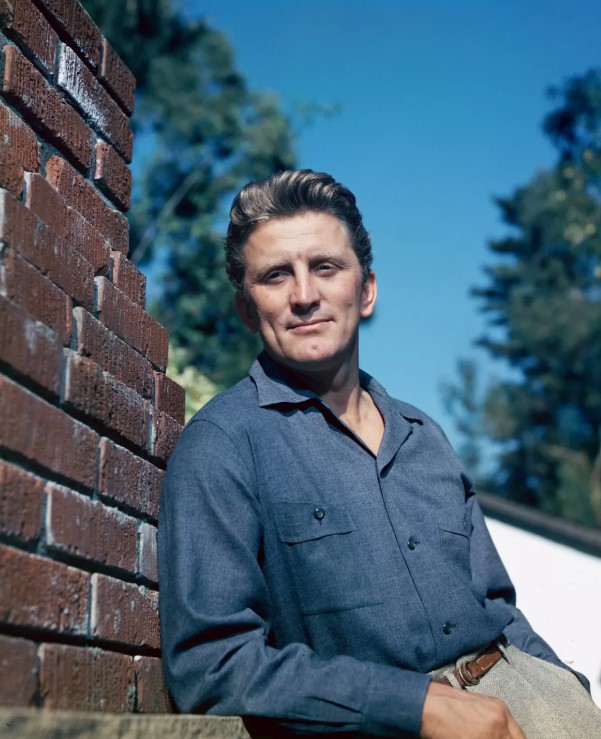
A key turning point came with Champion in 1949. Douglas played a ruthless boxer whose hunger for success pushes him toward increasingly difficult choices. The performance brought him his first Academy Award nomination and established him as a leading man capable of carrying demanding dramatic material.
The role also demonstrated what audiences would come to expect from Douglas: energy, emotional directness and a willingness to portray characters who were not always easy to like. Instead of softening their rough edges, he often leaned into their contradictions, giving his performances a tension that helped them remain memorable decades later.
A remarkable run of major films
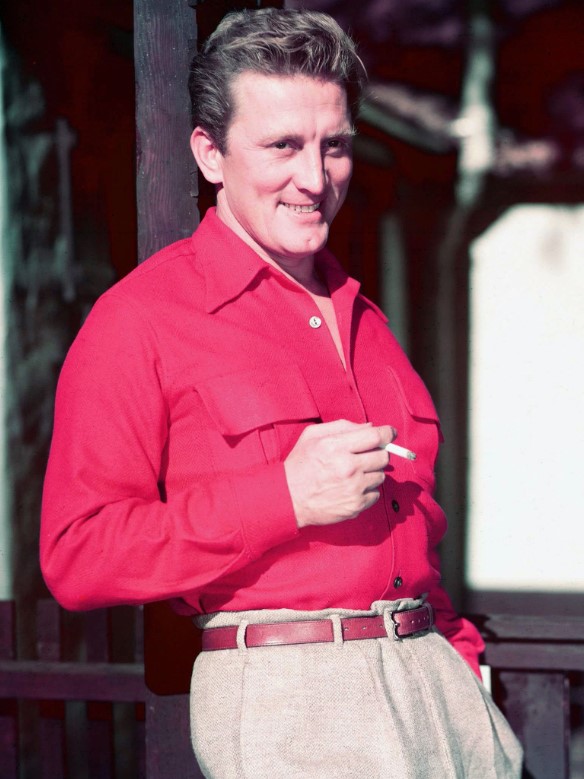
Douglas continued to take on ambitious roles throughout the 1950s. In The Bad and the Beautiful he played a driven Hollywood producer, while Lust for Life gave him the challenge of portraying painter Vincent van Gogh. That performance earned him another Academy Award nomination and highlighted his willingness to take on emotionally demanding characters.
He also starred in Stanley Kubrick’s Paths of Glory, a powerful anti-war drama that has remained one of the director’s most admired early films. Douglas’s performance helped anchor the story’s moral tension, reinforcing his reputation as an actor drawn to films with weighty themes rather than simple heroics.

“Spartacus” became part of Hollywood history
One of the most important chapters of Douglas’s career came with Spartacus in 1960. He not only starred in the film but also served as a producer, giving him influence beyond his performance in front of the camera. The epic became one of the roles most closely associated with him and helped secure his place in popular culture.
The production is also remembered for a decision with wider importance to the film industry. Douglas publicly credited screenwriter Dalton Trumbo, who had been blacklisted during the era of political persecution in Hollywood. By putting Trumbo’s name on the film, Douglas helped challenge a system that had prevented many writers and artists from openly working under their own names.
That choice strengthened his image as more than a movie star. It showed that he was willing to use his position to push for creative freedom and professional recognition at a time when doing so carried real consequences within the industry.
A career defined by range and independence
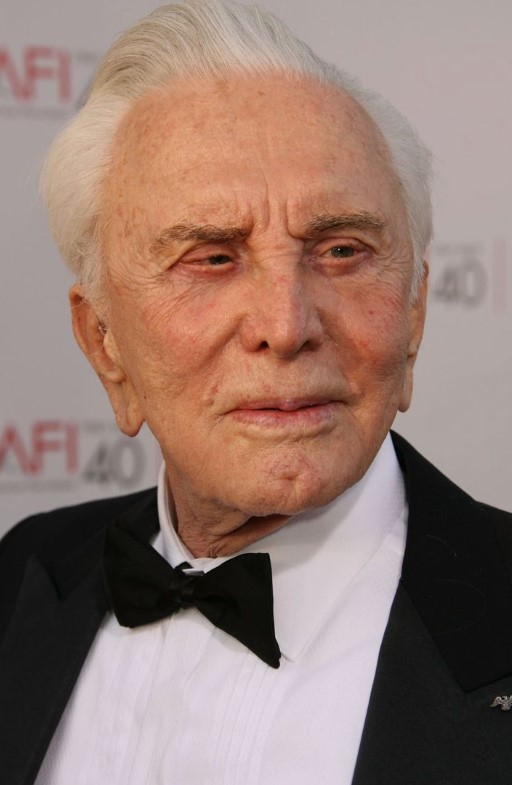
Across decades of work, Douglas repeatedly moved between prestige dramas, large-scale productions and challenging character studies. His performances were rarely passive. Even when playing men with serious flaws, he brought an intensity that made them feel active, restless and unpredictable.
His interest in producing also gave him greater control over the kinds of stories he could help bring to the screen. That independence mattered in an era when studios often exercised enormous influence over actors’ careers. Douglas’s determination to shape his own path became an important part of his reputation in Hollywood.
A legacy that reached beyond acting
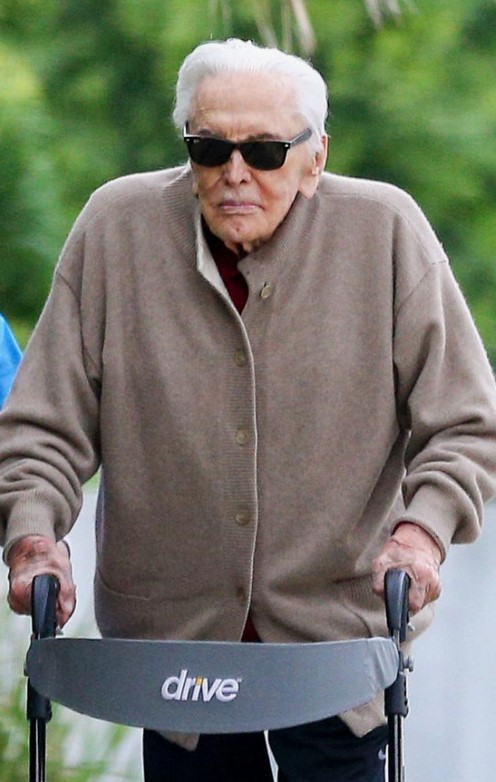
The source article also points to the many ways Douglas’s life extended beyond film. He became known as an author and philanthropist and continued to attract public attention well into his later years. He survived serious health challenges and remained a prominent symbol of an earlier Hollywood era long after many of his contemporaries were gone.
What ultimately makes his story so enduring is the combination of artistic achievement and personal determination. Douglas left behind a filmography filled with major titles, but his influence also came from the choices he made behind the scenes: supporting creative independence, challenging industry restrictions and taking responsibility for the projects he believed in.
For audiences discovering classic Hollywood today, his work still offers a direct connection to a period when movie stars were expected to carry entire productions through personality and presence. Kirk Douglas did that repeatedly, and his strongest performances continue to explain why his name remains so closely tied to the history of American cinema.