For generations of Americans, Dick Van Dyke has represented something increasingly rare in entertainment: uncomplicated joy.
He danced across rooftops, stumbled over living-room furniture, solved television mysteries, and made audiences laugh without ever seeming distant from the people watching at home. Even at the height of his fame, he possessed the warmth of a favorite neighbor—the cheerful man who might wave from across the street or tell a funny story while standing in line at the grocery store.
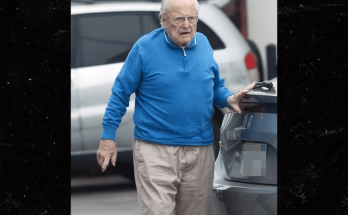
That familiar warmth was visible again during a recent casual outing in Los Angeles.
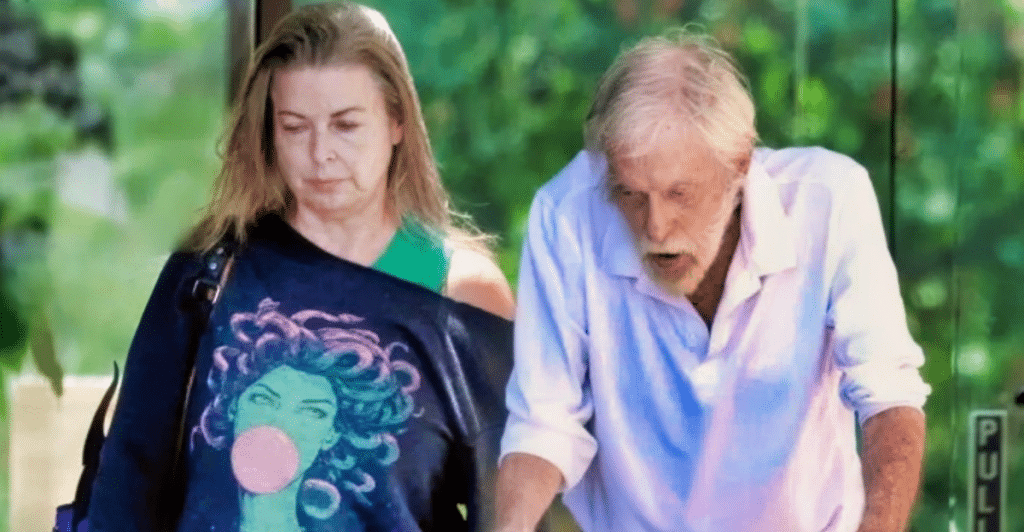
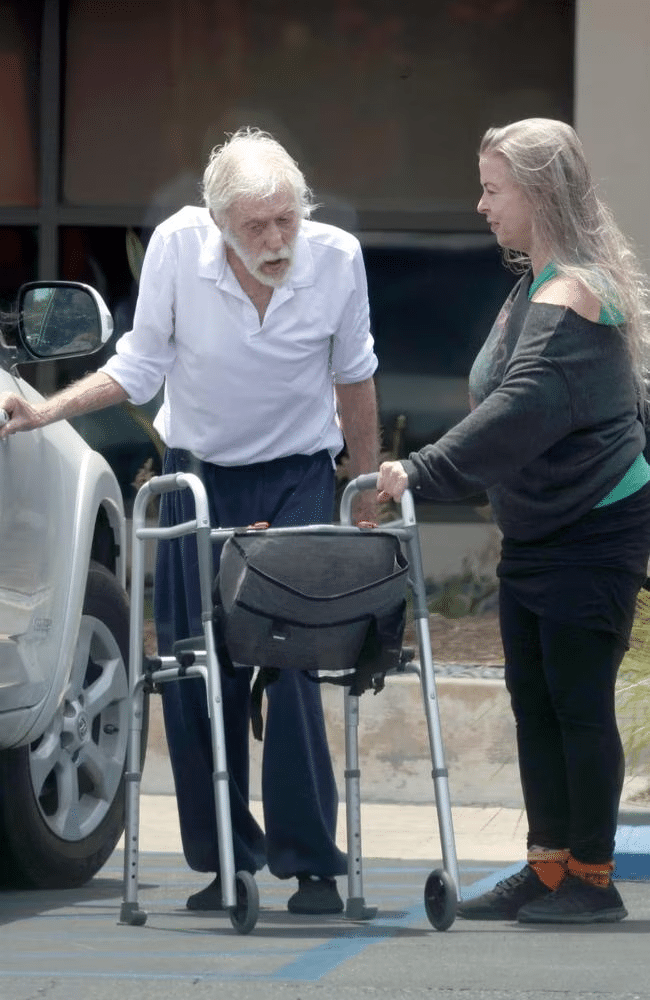
Photographed beside his wife, Arlene Silver, the legendary entertainer moved carefully with the support of a rolling walker. There was no red carpet, formal wardrobe, or carefully arranged publicity moment. It was simply a sunny afternoon, a brief coffee stop, and a married couple spending time together. The original report identified the man in the photographs as Dick Van Dyke, who celebrated his 100th birthday in December 2025.
A Familiar Face in an Ordinary Setting
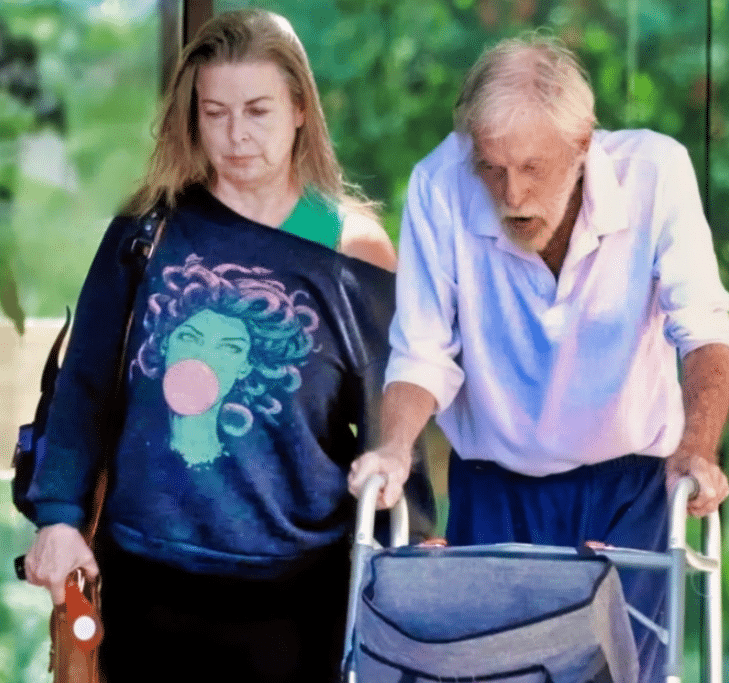
In the candid photographs, Van Dyke wears a pale collared shirt with the sleeves rolled comfortably above his wrists. His clothing is practical and relaxed, far removed from the costumes associated with his most famous performances.
Silver walks close beside him, carrying a handbag and wearing a loose dark top decorated with a colorful portrait. Their surroundings appear completely ordinary: a glass entrance, green trees reflected in the background, and the bright California daylight.
That simplicity gives the images their emotional power.
Celebrity photographs are often designed to display glamour, expensive clothing, or dramatic transformations. These pictures show something quieter. They capture two people moving through the familiar routine of an afternoon errand.
For older readers, the scene may recall a time when daily life was not constantly recorded. A trip for coffee remained just that. People left home without announcing where they were going, and photographs usually marked birthdays, vacations, weddings, and holidays rather than every ordinary moment.
Yet ordinary moments often become the ones we remember most clearly.
The Entertainer Who Entered America’s Living Rooms
Van Dyke’s career reaches back to the years when television was still becoming the center of American family life.
Many viewers first came to know him as Rob Petrie, the comedy writer and family man at the heart of The Dick Van Dyke Show. The program combined workplace humor with scenes of suburban family life, allowing audiences to follow Rob from the writers’ room to the home he shared with Laura Petrie, memorably played by Mary Tyler Moore.
In those days, television programs arrived only once a week. Families gathered at a scheduled hour, adjusted the antenna when the picture became unclear, and watched together because there was no option to pause or replay the episode.

The humor was energetic but affectionate. Van Dyke could turn a misplaced object, a misunderstanding, or an awkward entrance into a complete comedy routine. His famous physical grace made every stumble seem carefully choreographed, even when the joke depended on making it look accidental.
The series helped establish him as one of the defining television performers of the 1960s and contributed to a career that ultimately brought him major honors across television, theater, and recorded music.
From the Petrie Living Room to Cherry Tree Lane
Van Dyke’s television success was followed by one of the most beloved performances in American movie history.
In Disney’s 1964 musical Mary Poppins, he played Bert, the cheerful jack-of-all-trades who swept chimneys, created sidewalk drawings, and led audiences into a world where imagination could transform an ordinary London afternoon.
Children delighted in the animation, music, and rooftop dancing. Parents appreciated the humor, craftsmanship, and gentle lessons about family. Decades later, many grandparents introduced the movie to new generations, discovering that its songs still carried the same warmth.
Van Dyke later brought his musical energy to Chitty Chitty Bang Bang, playing an inventive father whose unusual automobile carried his family into a colorful adventure.
These movies belonged to an era when seeing a major family film often meant visiting a grand neighborhood theater. Ushers guided people toward their seats, curtains opened before the picture began, and audiences experienced the story together on one enormous screen.
Today, those films can be watched at home with the touch of a button. Yet for viewers who saw them during their original theatrical runs, the first memories remain vivid: the posters outside the cinema, the smell of popcorn, and children trying to repeat the songs during the drive home.
A Career That Continued Across Generations
Van Dyke did not remain associated with only one decade.
Years after Rob Petrie and Bert became cultural landmarks, he returned to weekly television as Dr. Mark Sloan in Diagnosis: Murder. The series introduced him to viewers who may not have been born when The Dick Van Dyke Show first aired.
As the friendly physician with an unusual ability to solve crimes, he once again brought humor and reassurance to television. The role suited the qualities audiences had always admired in him: curiosity, kindness, intelligence, and an approachable manner.
That ability to connect with multiple generations is one reason his legacy feels so unusual.
Grandparents remember his earliest television work. Their children may associate him with family musicals or syndicated reruns. Younger viewers have discovered him through streaming services, anniversary programs, guest appearances, and clips shared online.
In 2024, at age 98, Van Dyke became the oldest recipient of a Daytime Emmy for an acting performance, demonstrating that his career had continued far beyond the period usually associated with Hollywood stardom.
The Partnership Beside the Public Legend
The woman walking beside Van Dyke in the candid photographs is not merely a companion assisting him during an outing. Arlene Silver has shared both his private life and his continuing love of music and performance.
The two met in 2006 at the Screen Actors Guild Awards, where Silver was working as a makeup artist. They eventually married on February 29, 2012, choosing Leap Day for their wedding. Over the years, they have performed together and spoken warmly about the laughter, music, and companionship at the center of their marriage.
Their age difference attracted public attention, but the couple has consistently described a relationship grounded in affection and shared interests.
That connection appears naturally in the recent photographs. Silver stays close without turning the outing into a performance for the cameras. Van Dyke concentrates on each step, while the two continue forward together.
The moment is a reminder that lasting companionship is often expressed through small actions rather than grand declarations.
It can be found in matching another person’s pace, carrying what needs to be carried, waiting patiently near a doorway, or simply being present during an ordinary Tuesday afternoon.
Aging Without Losing One’s Identity
Photographs of an older public figure can sometimes encourage unfair comparisons with the person audiences remember from decades earlier.
But a century of life should not be judged against a single movie scene or television episode.
The young performer who danced with chimney sweeps and leaped across furniture did not disappear. That energy became part of an extraordinary personal history—one filled with performances, family milestones, friendships, challenges, and countless mornings that were never photographed.
Using a walker does not erase a lifetime of movement. It allows movement to continue.
Van Dyke’s public appearances offer a valuable reminder that aging is not a failure to remain young. It is the privilege of carrying one’s memories forward while adapting to the needs of the present.
At 100, he does not need to reproduce the movements of Bert or Rob Petrie to remain recognizable. A familiar smile, expressive face, or flash of humor is enough to bring decades of memories rushing back.
The Enduring Gift of Laughter

Few performers have made happiness look as natural as Dick Van Dyke.
His comedy rarely depended on cruelty. His musical performances invited audiences to join rather than simply admire. Even when his characters faced confusion or embarrassment, the atmosphere remained generous.
That quality mattered in American homes.
Television and movies often became sources of comfort during difficult periods. A familiar episode could lighten a stressful evening. A musical could bring a family together. A well-timed joke could briefly make the outside world feel less complicated.
Van Dyke’s longevity has allowed audiences to recognize the full value of that contribution. His work did more than entertain people during its original release. It became part of family traditions and personal histories.
A song from Mary Poppins may remind someone of a mother who sang while washing dishes. A Dick Van Dyke Show rerun may bring back the living room where grandparents once sat. An episode of Diagnosis: Murder may recall a quiet evening shared with a spouse who is no longer there.
Entertainment becomes meaningful when it attaches itself to real life.
A Quiet Photograph With a Century Behind It
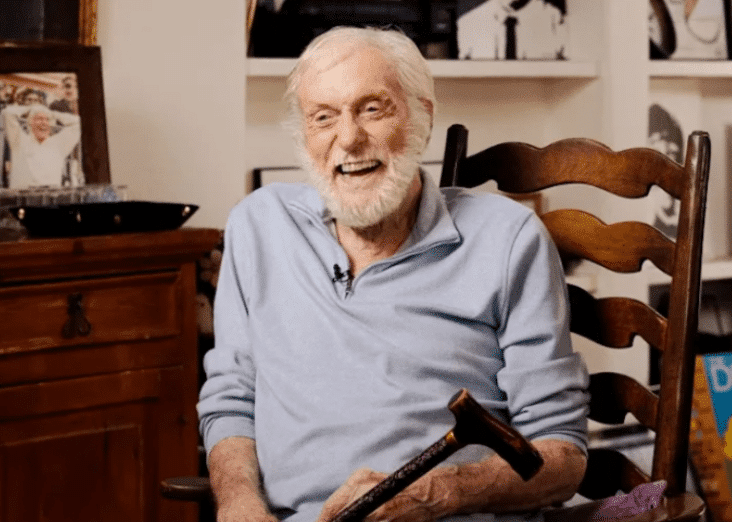
The final portrait presents the face audiences know so well.
Van Dyke sits in a wooden chair, holding a cane across his lap and smiling broadly. Photographs and personal mementos fill the room behind him. He appears surrounded not by the machinery of Hollywood, but by the accumulated evidence of a life.
That may be the most fitting image of all.
A career is usually summarized through awards, famous roles, and opening-night photographs. A life is measured differently. It is found in relationships, routines, perseverance, and the ability to remain interested in tomorrow.
The recent candid outing does not need a dramatic explanation. Dick Van Dyke and Arlene Silver were simply moving through a sunny Los Angeles afternoon together.
Yet behind that ordinary scene stands a century of American entertainment history.
The careful steps may be slower now, but the humanity that made Van Dyke beloved remains immediately visible. He is still the familiar figure generations invited into their homes—warm, approachable, and quietly reminding everyone that a good life is built not only from spectacular moments, but also from the simple pleasure of continuing forward beside someone you love.