

The Grammy Awards have always given artists, presenters, and performers a chance to make an entrance. From the glittering gowns of the 1970s to the bolder red-carpet statements of recent decades, music’s biggest night has often treated fashion as part of the show.
At the 68th Annual Grammy Awards in Los Angeles, Heidi Klum arrived in a custom creation that immediately started a conversation. The look was not designed as a conventional evening dress. It was a carefully molded leather piece by German designer Marina Hoermanseder, made to resemble a sculptural second skin.
Some viewers found it surprising. Others admired the craftsmanship. But the most interesting part of the story lies beyond the first reaction: the collaboration, the construction, and Klum’s long-standing interest in fashion that is willing to take a risk.
A Sculptural Look for Music’s Biggest Night
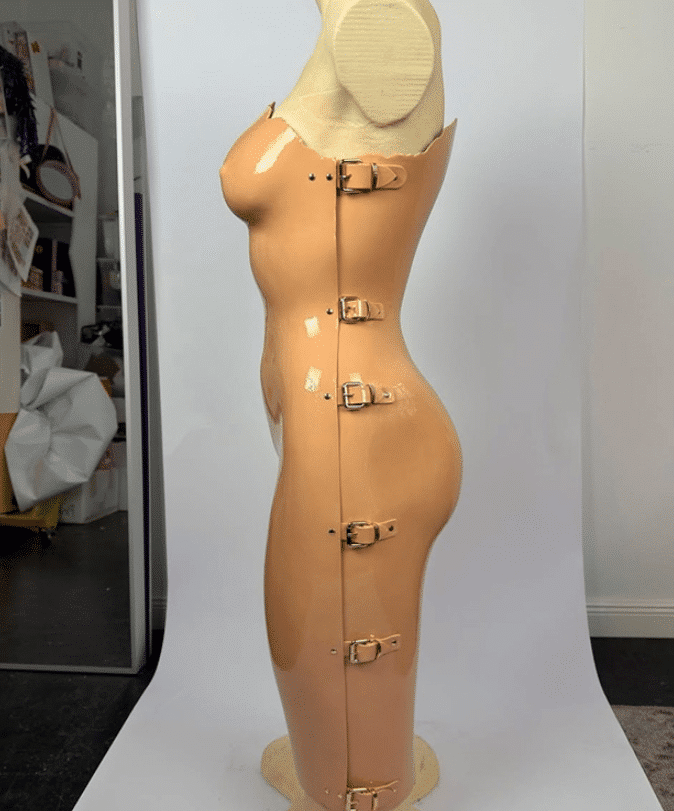
Heidi Klum attended the 2026 Grammy Awards at Crypto.com Arena wearing a body-molded, skin-toned leather design. The structured piece had a glossy finish, side buckles, and a silhouette that turned the outfit into something closer to wearable sculpture than a traditional gown.
Klum paired the look with neutral pumps, minimal jewelry, and loose blonde hair. The overall styling allowed the design itself to remain the focus.

The dress was created by Marina Hoermanseder, a designer known for highly structured work, unusual shapes, and leather craftsmanship. Rather than using flowing fabric, Hoermanseder built the piece around form, texture, and construction.
That approach helped explain why the outfit became such a memorable part of the evening. It did not rely on sequins, a sweeping train, or a familiar old-Hollywood formula. It asked viewers to look at the materials and the design process in a different way.
How the Dress Was Made
The custom look began with a mold of Klum’s body. Leather was shaped over that form, then dried, finished, color-matched, and lacquered to create its polished surface.
The process was detailed and time-consuming. Unlike a fabric dress that can stretch, drape, or move with the wearer, molded leather holds its structure. That is part of its appeal, but it also creates practical challenges.
Klum later explained that the design felt like an armor piece because it had little flexibility. The side buckles made it relatively easy to put on and remove, but the close construction meant that walking required very small steps.
This is the side of red-carpet fashion that audiences do not always see. A striking appearance may last only a few minutes in photographs, yet it can take many hours of planning and handwork to create. In this case, the craftsmanship became as much a part of the story as the final look.
Heidi Klum’s Good-Humored Response
Klum did not pretend the garment was effortless to wear. She openly joked about its limitations, explaining that she would be giving a “standing ovation” throughout the night because sitting was not a realistic option in the rigid design.
Her humor helped keep the conversation in perspective. The outfit was designed for a red carpet, not for everyday comfort. It was an artistic fashion statement with a clear purpose: to create a dramatic visual moment.
After the carpet, Klum changed into a more flexible black outfit for the ceremony. The practical decision was a reminder that even the most elaborate red-carpet designs have a time and a place.
For longtime fans, her response was characteristic of the Heidi Klum audiences have watched for years. She has built a career on professionalism, playfulness, and an eagerness to embrace the theatrical side of fashion without taking herself too seriously.
A Career Built Around Fashion and Reinvention
Heidi Klum has spent decades at the center of fashion and entertainment. She became internationally known as a model, appeared on major magazine covers, and later expanded into television as the longtime host and executive producer of Project Runway.
For older viewers, Project Runway helped make fashion design feel accessible. The series brought audiences into workrooms, introduced them to emerging designers, and showed how much skill lies behind a finished garment.

Klum also became known for her elaborate Halloween costumes, which have ranged from playful to highly detailed and theatrical. Those yearly transformations have made clear that she enjoys fashion not only as glamour, but also as performance and storytelling.
The Grammy look fit naturally into that history. It was not a sudden departure from her public identity. It was another example of Klum working with a designer to create something visually ambitious.
Why Bold Red-Carpet Fashion Creates Conversation
Not every red-carpet outfit needs to appeal to everyone. In fact, some of the most enduring fashion moments are the ones that invite different opinions.
Think of Cher’s daring stage costumes, Diana Ross’s glamorous awards-show style, or Björk’s unforgettable swan dress at the Oscars. These looks lasted in public memory because they did more than follow a dress code. They reflected personality, era, and artistic point of view.
Klum’s molded leather piece belongs to that tradition of fashion experimentation. It was designed to be noticed, photographed, discussed, and remembered.
The discussion does not have to become personal or unkind. A fashion choice can be unusual without becoming an excuse to judge the person wearing it. The more interesting question is what the design was trying to achieve—and whether it succeeded in creating a distinctive visual idea.
The Value of a Designer Collaboration

Marina Hoermanseder’s work is known for its structured, body-conscious designs. Her creations often challenge the boundary between clothing, costume, and sculpture.
The collaboration with Klum gave that design philosophy a global stage. The Grammys reach an audience well beyond fashion insiders, and a look like this can introduce viewers to the work of a designer they may not already know.
That is one of the most useful roles celebrity fashion can play. It can spotlight artistry that might otherwise remain within runway shows or fashion studios. A red-carpet appearance can become a kind of introduction, showing the public what a designer is capable of creating.
For Klum, who has spent years supporting designers through television and public appearances, the partnership made sense. She was not simply wearing a label. She was helping present an unusual piece of craftsmanship to a large audience.
A Grammy Moment That Reflected Individuality
The 2026 Grammy Awards featured many glamorous and unconventional looks, but Heidi Klum’s outfit stood apart because of its construction and concept. It was a carefully made leather design that prioritized form, finish, and visual impact.
Some people will always prefer a classic satin gown or a sharply tailored suit. Others enjoy seeing red-carpet fashion move into more experimental territory. There is room for both.
What matters is that Klum’s appearance reflected the spirit of a major music awards show: creative people gathering to celebrate work that takes chances. Her dress was not intended to fade into the background, and it did not.
For audiences who have followed Heidi Klum from her modeling years through Project Runway, television, and her many fashion moments, the Grammys look offered another reminder of her signature approach. She remains willing to try something different, celebrate a designer’s imagination, and turn even a difficult walk across a red carpet into a moment of good humor.